The Right Run for the Wrong Reasons
When I had to pause and admit it was crappy, it finally hit me. For the first time in 20 years of running, I didn’t want to admit it. Running was the worst.
It would be dishonest to say I love running every time I go out. Some days I flat out don’t want to run and for no other reason, I do not run. And a lot of the time my runs suck. They start feeling awful, get slightly less crappy, but nonetheless, wrap up lousy. But I hit some post run routine stuff and move on. Having run for over 20 years you learn to absorb the ups and downs of running.
Then one day, it happened. I can’t tell you the day or the time or the run. But it happened.
I was out of gas. Like a driver stranded on the side of the road in the dark.
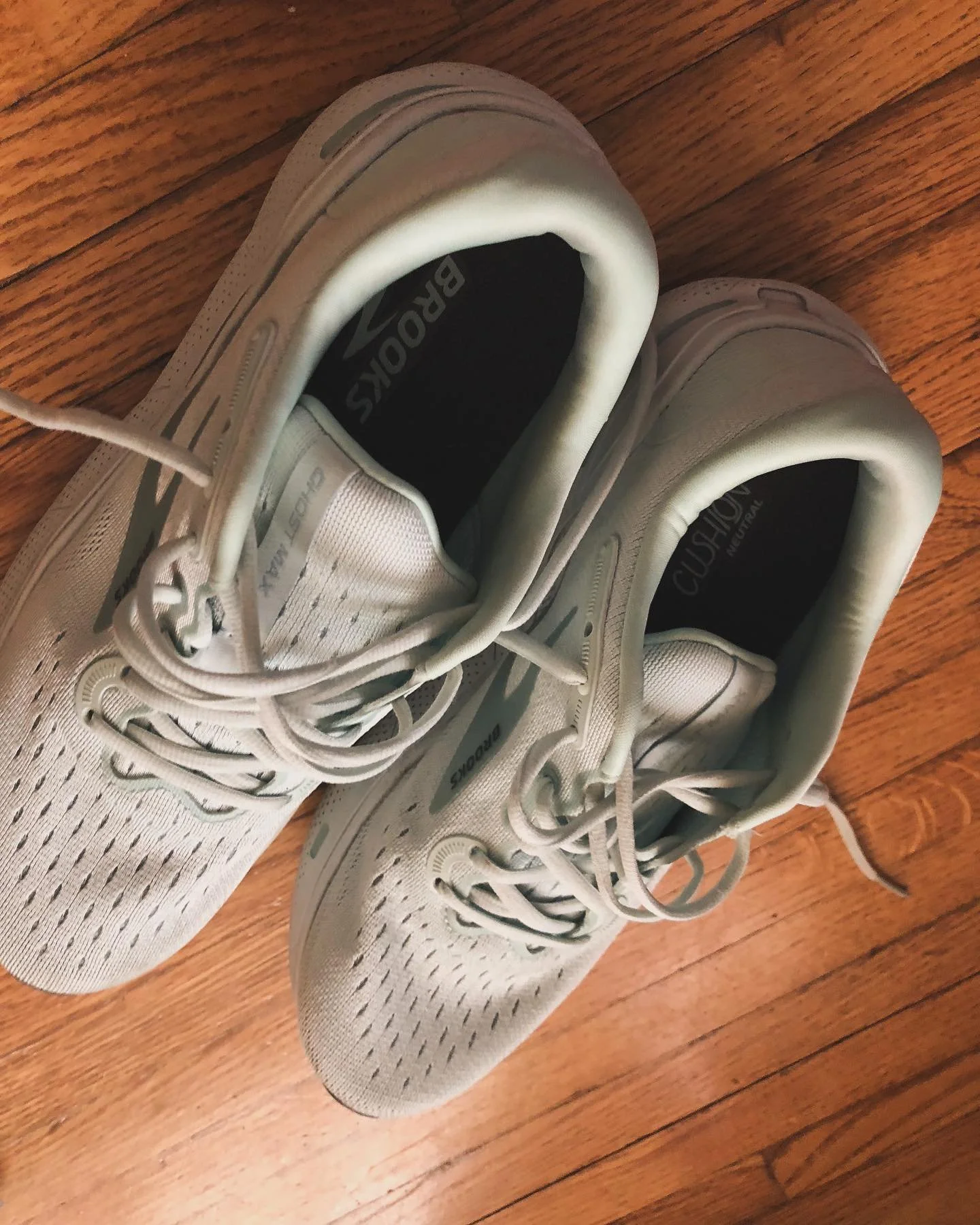
My shoes still got laced up. I was still out on my favorite paths, still running. Yet for the first time in my life, it felt like I was getting dragged behind an invisible tow truck to a destination I had not picked out.
I wasn’t running because I really wanted to or because I had some big training goal that required me to push through the monotony sometimes associated with ambition. The best way it could be described is an analogy from my time as a less than mediocre 1500m runner in college.
Some days, in a big meet, you get put in a heat that is above your pay grade. The whole time you warm up, the final run outs on the back stretch, you know ahead of time. This is going to be bad. If you were to PR by 5 seconds maybe you will be off the back by 2-3 seconds.
The front runners are going to run my 800 race pace the entire “metric mile”. Most of the runners will go out with them. If I go too, i’ll be toast with 500 to go. Truthfully, if my mind reflected the imaginary blue-collar I pretended to wear, it would be a great opportunity to ride that tow truck as long as possible and be proud of where ever that ended up. Likely a good result I could be proud of in the end.
But when you don’t want to be there, the race is over before it starts. When your goal isn’t the same as the guys in the race, when their purpose is to test the limit and you’re just…there. Yeah, that’s not good. You run toward the finish line because it’s the only exit from a room you do not want to inhabit.
——
I started running occasionally as a habit in eighth grade. I kept running over the years because I enjoyed it. The challenge, the struggle, the feeling that I can actually do stuff that is hard. And eventually what was once hard, a 4 mile run, a mile run in under five minutes, a college cross country 8k, running every day for 18 months. training for AND completing a marathon, these became normalized and within my capacity.
I do hard stuff because most stuff worth doing is pretty hard sometimes. And as I became a better runner (relative to my beginning), somehow, in ways I’ll never understand but have spent my entire coaching career trying to convey, running contributed to me being a better, more complete version of myself.
——
Social Media influencers. College coaching. Strava. I was in a heat with these guys, going some place I never really wanted to go, as slowly and painfully as you can possibly get there.
After over 20 years of running and 14 years of coaching, running became my way of proving something. To someone who wasn’t even watching. Or worse, didn’t even know I existed.
Why did I need to prove my way was better than social media famous runners even though I wasn’t one of them? Why did I need other coaches to think my balance of being an award winner and still finding time to run 30 miles a week, even in season (no one gasped) was impressive? Why did it bother me that relatively new runners were accomplishing “my running goals” (you know runners never have the same goals) because I was “sacrificing” for other people?
While I’m at it, embarrassingly, I even became jealous of dear friends who have successfully raised thousands of dollars for charity while also exponentially exploding into better runners and not surprisingly, inspired hundreds to join their cause.
Suddenly my easy runs were a frustratingly endless cycle of life sucking failures to relax. And of course when you’re in the wrong race the pace will always be too hot to hang on to.
One night, after suffering through a 45 minute “easy” run, I returned to the house and my wife asked me how it went. When I had to pause and admit it was crappy, it finally hit me. For the first time in 20 years of running, I didn’t want to admit it. Running was the worst.
——
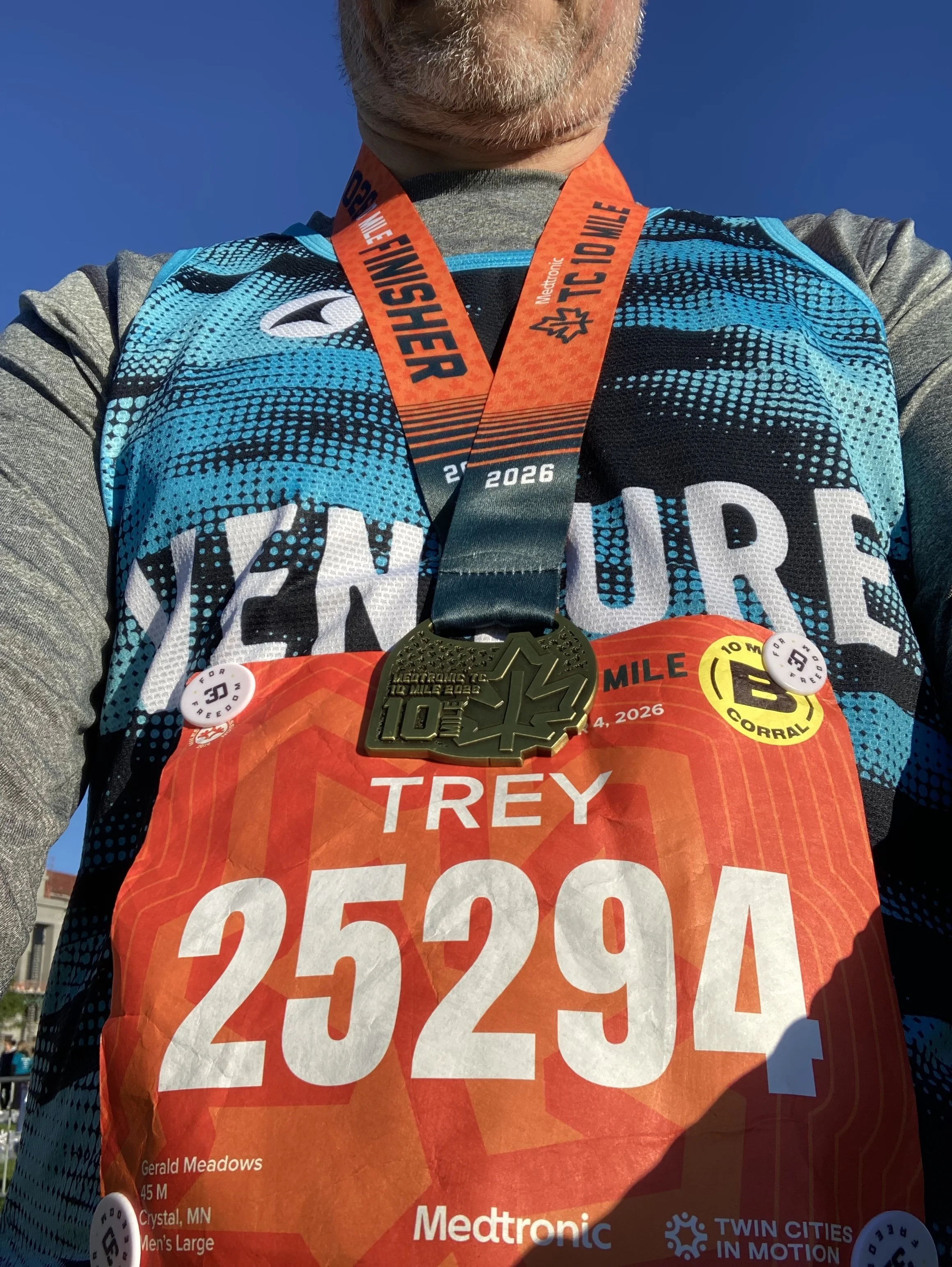
It’s not the worst anymore. In fact, it’s a lot better than a few months ago. And guess what, I’m in worse shape than I was in October when I ran the best 10-mile race time i’ve posted in 10 years. But who cares.
I look forward to running 4-5 times per week and hopefully my life allows to me to turn two decent years of running into a new 13.1 mile PR this summer. It’s definitely the race I should be running and I want to be there.
It’s honestly really cool if you have a ton of followers that are inspired by your passion and accomplishment. It increases my belief in God that people are able to raise a frigging mega-ton for charity using their running. And I am convinced it’s a good thing for our sport that so many “everyday” runners are using their personas to get freebies or product discounts.
But I put my experience out there knowing maybe a few people will relate and I can encourage them. It’s okay if running sucks right now. It’s okay if you don’t have 11.1k followers or raise $10k (but please do if you have that gift), or influence enough people to get discounts or free stuff.
I know I didn’t start or keep on running for any of those things. And I bet you didn’t either. You know hard stuff sucks sometimes. You know the difference between the normal struggles and when you’re simply in the wrong race. But you are the only one who gets to decide which race you’re running.
Be the runner you enjoy being. It may not be the fastest or easiest way to a better performance. Yet it is the surest way I’ve found to stay true to the sport itself and keep on running.
Wrapping up Thoughts on Healthy Running and Racing Context

Today's post connects back to my previous two entries about the healthy context I believe is necessary for us to feel successful in racing. It is absolutely necessary to follow planned and organized training schedules for runners to reach their goals. If I did not believe that I would not be in this profession and certainly not publishing my thoughts to a web address with "Coach" in the URL.
Yet the need to remain connected to the fundamental reason we chose to engage in running must never be lost. The freedom in movement, the simplicity in task, the escape from our daily grind in an allegorical act of taking control. In pursuit of worthwhile goals and results in sport there is an inescapable demand for monotonous rigor carried out over time to harden the athlete. Hours of batting practice or the golf driving range are, in those aspects, not that different than runs on my favorite four miles and change.
However, there is danger present when the reasons my favorite route is preferred over others becomes the tree lost in the proverbial woods. At that point it is only a matter of time before motivation fails, goals become inconsequential and I might surmise that no training plans will rescue the athlete.
Every run is not fun. Monotony will steal joy. Athletes will have to drag themselves reluctantly toward the next workout. Coaches will need creativity and confidence to inspire athletes on the days dulled by the "trial of miles". But over the last few months I have become more convinced than ever that sometimes we must leave room for the freedom of simplicity in our training.
The great part about my favorite route is that it became so over time spent running there over almost two decades. I know the distances by heart within less than a tenth of a mile. I know the hills and flats and holes in the pavement. Because of the past work relationship I have with my beloved "Hennepin Loop" there is trust that I just need to cover the route in one of its various iterations. The other variables are not always required reading every time out on the path.
As a coach taking the watch off for an RPE based workout is great for athletes training for cross country where times are often irrelevant to team scores. But sometimes it also opens the window for us to look back and remember why we chose to run in the first place. Every time my fitness has been good enough to achieve fast times at my ability level there have been complicated, well planned, physically and mentally taxing workouts on the schedule. But there were also days where I could trust my natural self-selected recovery or easy pace over a route that was close enough to the distance I needed to cover.
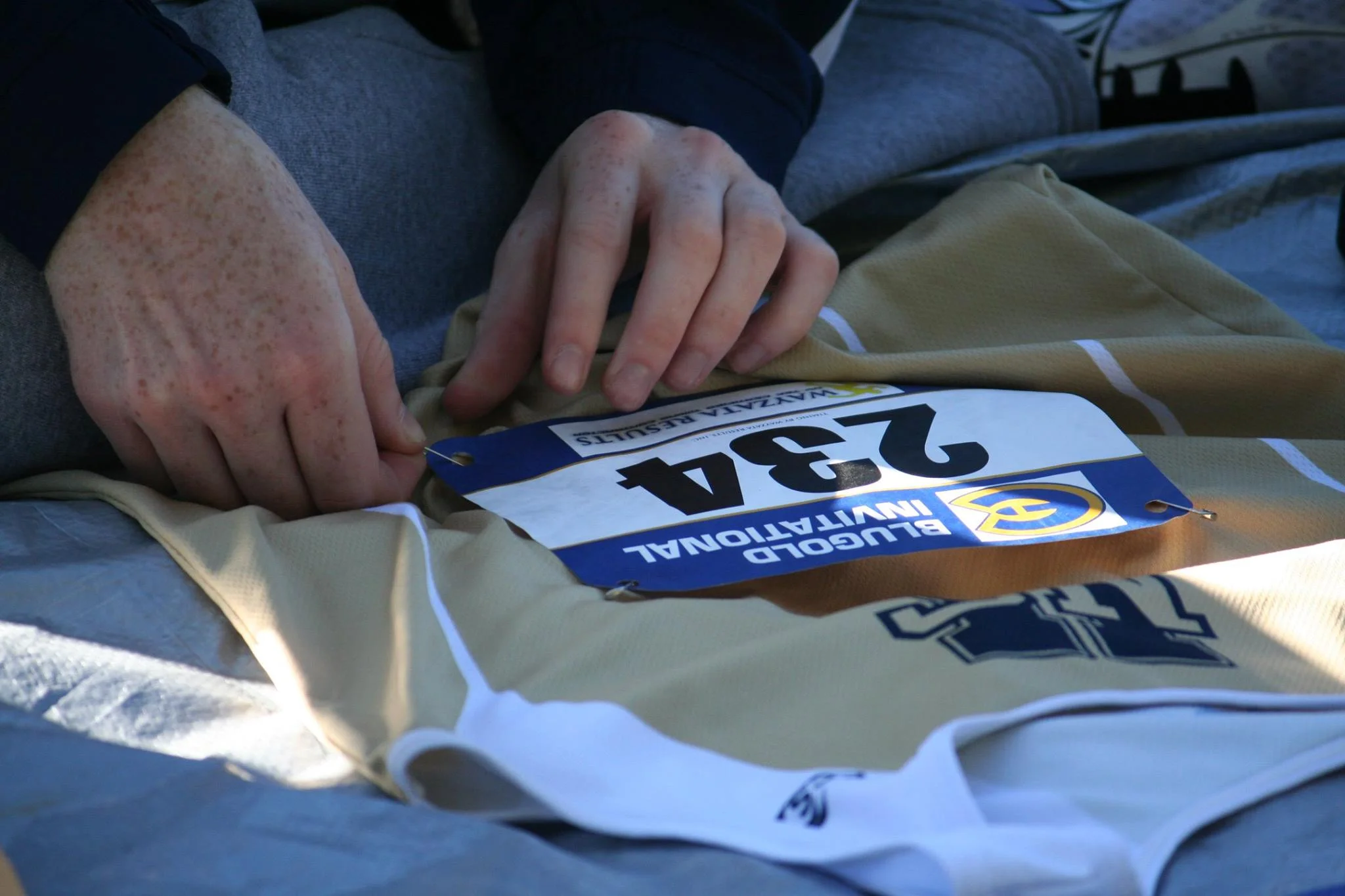
In those days I can tell if the training is too much. In those days I can see the forest tree by tree. Enough of those days allow me to pin on a bib number with enough mental, physical and emotional energy available to confidently unleash my best effort and embrace the spirit of competition that drew me to running in the first place.
Healthy Running and Racing Context, Part 2

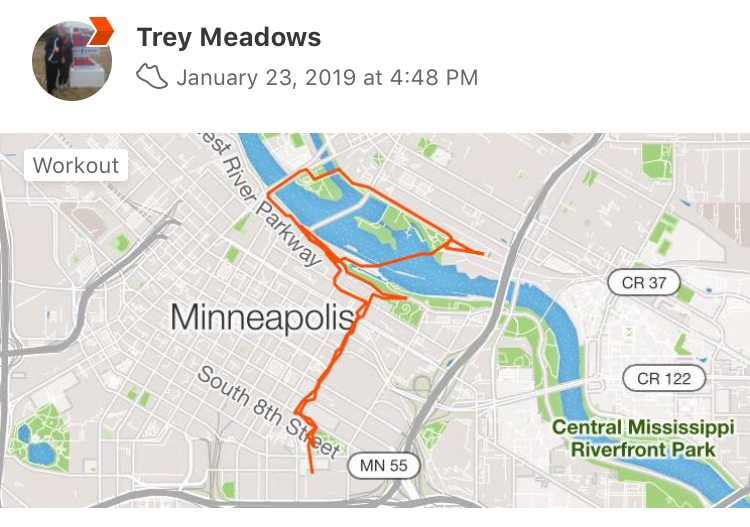
All regular runners, competitive, recreational or fitness, have a go to running route. The four miles and change that compose my favorite circuit were actually the key ingredient in the training that produced the fastest times of my competitive college running career.
I could and have run this loop along the Mississippi River in downtown Minneapolis in the dark of morning or night. I've run the lollipop style route both forward and backward. I've run it as a segment of a longer run all the way up to 12 miles. It's flat stretches, bridges, light polls and hill segments have served for hours of repeats hitting every imaginable goal for physiological stress and adaptation possible.
You'll find it known simply as the Hennepin Loop in my logs and journals and by the dozens of athletes that I coach who also attend the same university I did as a college athlete. Hennepin Loop + Nic Island means 5.2 miles. Hennepin Loop + Boom equals 6.5 miles. Hennepin/Stone Arch Fartlek means an RPE based fartlek run measured by light poles on two long bridges over Old Man River.
It seems to me many of us have these home turf areas that are the foundation to our successful running endeavors. But how does this tie into my previous post about creating a healthy context for serious athlete training and connect back to my perceived success at a local 10-mile racing event?
Back in February in the midst of an intense period of sleep depravity, work pressure and general winter doldrums common in Minnesota I needed to get out for a run. It also needed to be as seamless as possible. Shorts. Shirt. Socks. Shoes. Run.
Simple. No watch or GPS. No phone or fitness apps. No uploads, downloads, instagrams or tweets (Of course I'm ruining it by blogging about it now). Just a familiar, favorite route where the mind turns off, the CNS takes over and some unknown time later you are back home again.
I will never know exactly which physiological systems were taxed or the extent to which they were pushed. The minutes per mile down to hundredths of a mile will remain an unknown in my log. Yet the time spent on my feet that day were just as much a training day as any prescribed workout with umpteen variables dialed in and programed into my Garmin 220.
There is more to say on this but I'm going to keep this post short and extend my thoughts on to another entry later this week. Thanks for staying with me on this topic and I hope to have you back when I wrap up things up next time.